Buy safeways.eu ?
We are moving the project
safeways.eu .
Are you interested in purchasing the domain
safeways.eu ?
domain@kv-gmbh.de · 0541-91531010
Buy safeways.eu ?
Can isotopes occur naturally?
Yes, isotopes can occur naturally. Isotopes are variants of a particular chemical element that have the same number of protons but different numbers of neutrons. Many elements have naturally occurring isotopes, and they can be found in various proportions in nature. For example, carbon has three naturally occurring isotopes: carbon-12, carbon-13, and carbon-14. These isotopes are formed through natural processes such as radioactive decay and nuclear reactions. **
How do neutrons enter isotopes?
Neutrons enter isotopes through a process called neutron capture. Neutron capture occurs when a neutron is absorbed by the nucleus of an atom, resulting in the formation of a new isotope. This process can change the atomic mass of the isotope without affecting its chemical properties. Neutron capture plays a crucial role in nuclear reactions and the formation of heavy elements in stars. **


Similar search terms for Isotopes
Top-Angebote
Products related to Isotopes:
-
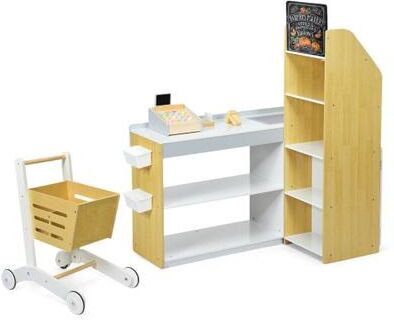
Uplift Essentials Supermarket Simulation Cash Register Set Interactive Educational Grocery Toy Supermarket Simulation Cash Register Set Interactive Educational Grocery Toy"Transform your home into a bustling marketplace with a highaction playset designed to teach the fundamentals of commerce and math. This supermarket simulation cash register provides a realistic ""checkout"" experience, complete with a functional..."61,97 $*Shipping: 0,00 $Secure redirect to the provider



-
What are isotopes in chemistry?
Isotopes are atoms of the same element that have the same number of protons but different numbers of neutrons. This means that isotopes have the same atomic number but different atomic masses. For example, carbon-12 and carbon-14 are isotopes of carbon. Isotopes can have different physical properties, such as different atomic masses, but they have similar chemical properties because they have the same number of protons and electrons. **
-
How do radioactive isotopes decay?
Radioactive isotopes decay through the process of emitting radiation in the form of alpha particles, beta particles, or gamma rays. This emission of radiation occurs as the unstable nucleus of the isotope seeks to reach a more stable state. The type of decay that occurs depends on the specific isotope and its atomic structure. Over time, the decay process transforms the original isotope into a different element or a different isotope of the same element. **
-
Are there isotopes, yes or no?
Yes, there are isotopes. Isotopes are atoms of the same element that have the same number of protons but different numbers of neutrons. This results in variations in atomic mass for a given element. **
-
What are the properties of isotopes?
Isotopes are atoms of the same element that have the same number of protons but different numbers of neutrons. This means that isotopes have the same chemical properties, but different physical properties due to their different atomic masses. Isotopes of an element have similar chemical behavior because they have the same number of electrons and therefore the same electron configuration. Isotopes are used in a variety of applications, including carbon dating, medical imaging, and nuclear power. **


Could one describe isotopes like this?
Isotopes are atoms of the same element that have the same number of protons but different numbers of neutrons. This means that isotopes have the same chemical properties but different atomic masses. Therefore, one could describe isotopes as variations of the same element with different atomic masses due to differing numbers of neutrons. **
What are the three carbon isotopes?
The three carbon isotopes are carbon-12, carbon-13, and carbon-14. Carbon-12 is the most abundant and stable isotope, making up about 98.9% of all carbon atoms. Carbon-13 is a stable isotope, making up about 1.1% of all carbon atoms. Carbon-14 is a radioactive isotope with a half-life of about 5,730 years and is used in radiocarbon dating to determine the age of organic materials. **
Top-Angebote
Products related to Isotopes:
-
Friendly Fresh Finds Foldable Stair Climbing Cart With Seat And Waterproof Bag For Groceries, Laundry And Travel blackTake the strain out of heavy loads and make every trip feel easier. This stair climbing cart is made for shoppers, apartment dwellers, seniors, and anyone tired of carrying bags by hand. With a roomy waterproof storage bag, builtin seat, and...91,97 $*Shipping: 0,00 $Secure redirect to the provider
-
Friendly Fresh Finds Stainless Steel Instant Noodle Bowl With Lid Portable & Sealed For Convenience blueEnjoy your instant noodles like never before with the Stainless Steel Instant Noodle Bowl with Lid. Perfect for noodle lovers, this innovative bowl offers a sealed, portable design that keeps your noodles fresh and secure. Whether you're at home, in...34,97 $*Shipping: 0,00 $Secure redirect to the provider
-
Uplift Essentials Supermarket Simulation Cash Register Set Interactive Educational Grocery Toy Supermarket Simulation Cash Register Set Interactive Educational Grocery Toy"Transform your home into a bustling marketplace with a highaction playset designed to teach the fundamentals of commerce and math. This supermarket simulation cash register provides a realistic ""checkout"" experience, complete with a functional..."61,97 $*Shipping: 0,00 $Secure redirect to the provider
-
Can isotopes occur naturally?
Yes, isotopes can occur naturally. Isotopes are variants of a particular chemical element that have the same number of protons but different numbers of neutrons. Many elements have naturally occurring isotopes, and they can be found in various proportions in nature. For example, carbon has three naturally occurring isotopes: carbon-12, carbon-13, and carbon-14. These isotopes are formed through natural processes such as radioactive decay and nuclear reactions. **
-
How do neutrons enter isotopes?
Neutrons enter isotopes through a process called neutron capture. Neutron capture occurs when a neutron is absorbed by the nucleus of an atom, resulting in the formation of a new isotope. This process can change the atomic mass of the isotope without affecting its chemical properties. Neutron capture plays a crucial role in nuclear reactions and the formation of heavy elements in stars. **
-
What are isotopes in chemistry?
Isotopes are atoms of the same element that have the same number of protons but different numbers of neutrons. This means that isotopes have the same atomic number but different atomic masses. For example, carbon-12 and carbon-14 are isotopes of carbon. Isotopes can have different physical properties, such as different atomic masses, but they have similar chemical properties because they have the same number of protons and electrons. **
-
How do radioactive isotopes decay?
Radioactive isotopes decay through the process of emitting radiation in the form of alpha particles, beta particles, or gamma rays. This emission of radiation occurs as the unstable nucleus of the isotope seeks to reach a more stable state. The type of decay that occurs depends on the specific isotope and its atomic structure. Over time, the decay process transforms the original isotope into a different element or a different isotope of the same element. **
Similar search terms for Isotopes
-
Friendly Fresh Finds Foldable Stair Climbing Cart With Seat And Waterproof Bag For Groceries, Laundry And Travel cyanTake the strain out of heavy loads and make every trip feel easier. This stair climbing cart is made for shoppers, apartment dwellers, seniors, and anyone tired of carrying bags by hand. With a roomy waterproof storage bag, builtin seat, and...91,97 $*Shipping: 0,00 $Secure redirect to the provider
-
Friendly Fresh Finds Stainless Steel Instant Noodle Bowl With Lid Portable & Sealed For Convenience greenEnjoy your instant noodles like never before with the Stainless Steel Instant Noodle Bowl with Lid. Perfect for noodle lovers, this innovative bowl offers a sealed, portable design that keeps your noodles fresh and secure. Whether you're at home, in...34,97 $*Shipping: 0,00 $Secure redirect to the provider
-
Are there isotopes, yes or no?
Yes, there are isotopes. Isotopes are atoms of the same element that have the same number of protons but different numbers of neutrons. This results in variations in atomic mass for a given element. **
-
What are the properties of isotopes?
Isotopes are atoms of the same element that have the same number of protons but different numbers of neutrons. This means that isotopes have the same chemical properties, but different physical properties due to their different atomic masses. Isotopes of an element have similar chemical behavior because they have the same number of electrons and therefore the same electron configuration. Isotopes are used in a variety of applications, including carbon dating, medical imaging, and nuclear power. **
-
Could one describe isotopes like this?
Isotopes are atoms of the same element that have the same number of protons but different numbers of neutrons. This means that isotopes have the same chemical properties but different atomic masses. Therefore, one could describe isotopes as variations of the same element with different atomic masses due to differing numbers of neutrons. **
-
What are the three carbon isotopes?
The three carbon isotopes are carbon-12, carbon-13, and carbon-14. Carbon-12 is the most abundant and stable isotope, making up about 98.9% of all carbon atoms. Carbon-13 is a stable isotope, making up about 1.1% of all carbon atoms. Carbon-14 is a radioactive isotope with a half-life of about 5,730 years and is used in radiocarbon dating to determine the age of organic materials. **
* All prices are inclusive of VAT and, if applicable, plus shipping costs. The offer information is based on the details provided by the respective shop and is updated through automated processes. Real-time updates do not occur, so deviations can occur in individual cases. ** Note: Parts of this content were created by AI.